Projects
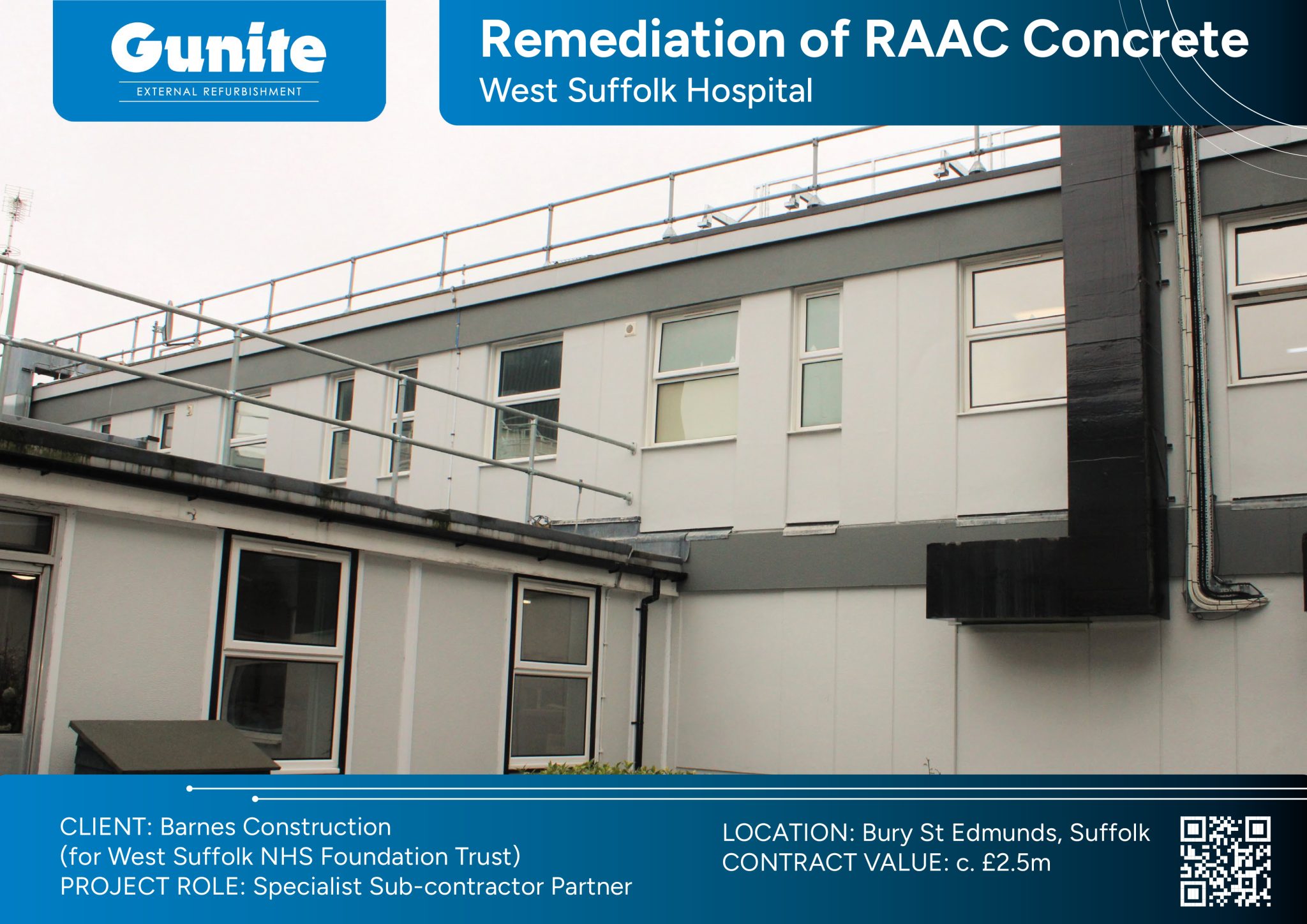
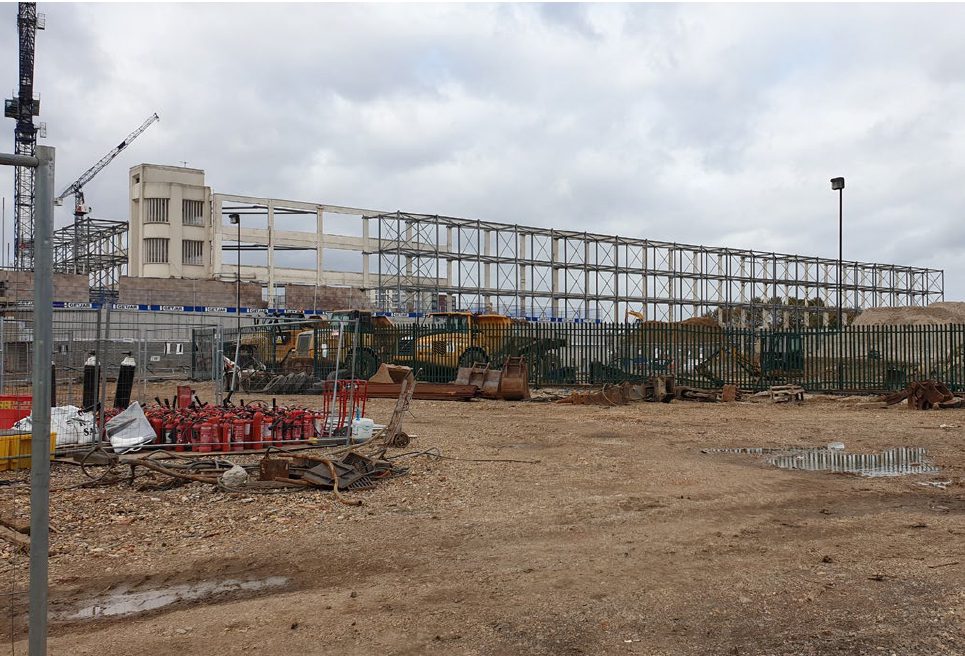
RAAC, West Suffolk Hospital
PROJECT HIGHLIGHTS
West Suffolk Hospital in Bury St Edmunds, Suffolk, is one of a collection of what were called ‘Best Buy Hospitals’, a concept which was a low-cost, standardized model of district general hospital designed by the UK’s Department of Health and Social Security (DHSS) in the late 1960s and 1970s to cut building costs and speed up NHS construction. They were largely formed using what is known as RAAC – Reinforced Aerated Autoclaved Concrete.
RAAC is a form of pre-cast lightweight, reinforced concrete used for both wall and flat roof construction. Unlike traditional concrete (a mixture of sand and aggregates of varying sizes mixed with cement), RAAC is very different from normal concrete. It has no coarse aggregates and instead is made in factories using very fine aggregate. With the addition of chemicals in the production process to create gas bubbles and then heated to cure the materials, it is relatively weak with a low capacity for developing bond with embedded steel reinforcement. As such, it doesn’t form the highly alkaline ‘passivating layer’ around the steel reinforcement contained therein to protect it. It is therefore considerably more susceptible to corrosion and rusting.
PROBLEM AND SOLUTION
This project comprised a major programme of corrosion management works to the exterior of all RAAC-formed buildings across West Suffolk Hospital. The project team – assembled back in 2020/2021 – by West Suffolk NHS Foundation Trust – had been pro-actively designing a corrosion management solution to prevent the development and spread of corrosion-related defects that might put the hospital’s RAAC buildings at further risk.
To this end, and following extensive on-site testing and investigation of the RAAC concrete and its reinforcing steel across each of the buildings, a corrosion management strategy was created prescribing the use of sacrificial anodes combined with protective anti-carbonation coatings to extend the life of the structures. As part of this corrosion management strategy, 2 no. sacrificial anodes PER PANEL were embedded into specially cut-out slots at predefined centres in each of the 6,000 RAAC panels. The system designed is a ‘strip anode’ system. These strip-shaped anodes had to be embedded into slots and temporarily powered at 8 volts prior to being connected to the exposed
steel reinforcement via recessed, pre-connected (to the anode) feeder wiring.
OUTCOME
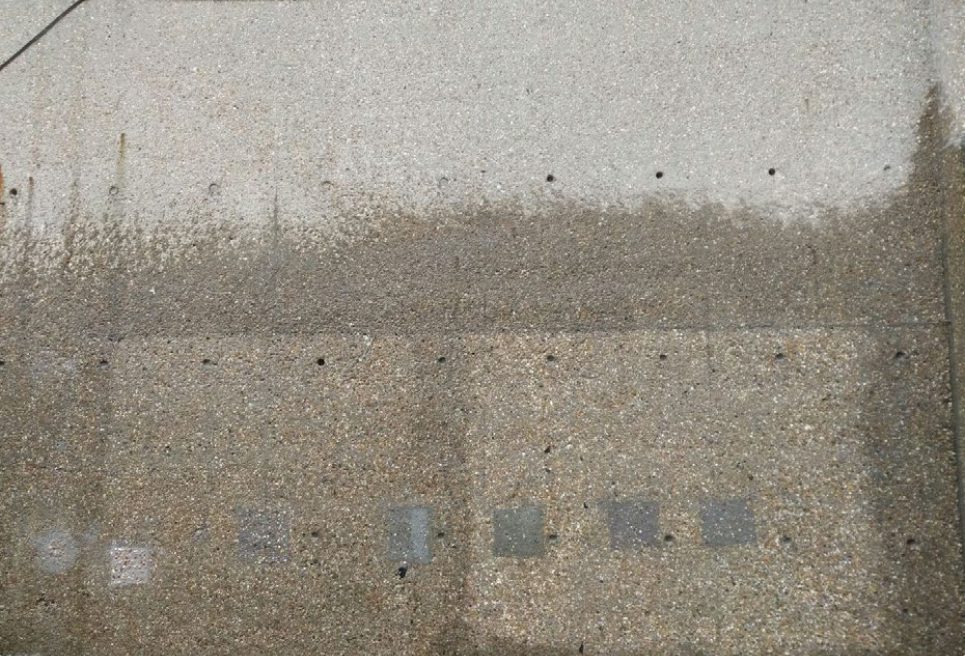
All existing external surfaces were power washed (at a suitably low pressure so as to not cause any damage to the RAAC panels) to remove surface dirt and contaminants and any loose or flaking existing coatings. The cleaned substrate was then marked up for the anode locations including cut out locations on panels and recess chase lines for feeder wires. All anode ‘pockets’ – located centrally exposing steel reinforcement for connection – had to be broken out manually and NOT using power tools to avoid damage to the panels. Feeder wire chases approximately 6mm wide were cut out using grinders connected to extraction units.
Following cleaning of the exposed reinforcement, stainless steel wire threaded tightly around reinforcement to form connection tails to enable connection of the feeder wires. Continuity checks with a multimeter were then carried out to ensure electrical continuity. The cut-outs were pre-wet using an electrolyte solution before injecting an embedment mortar to encapsulate the anodes fully and tooled off to ensure zero air-pockets. Within 24 hours of anode installation, the corrosion management system had to be connected to an 8v power supply and monitored for seven consecutive days to ensure full electrical continuity with checks being recorded every day across a series of panels. Finally, all surfaces received the application of protective, elastomeric coatings.

Third-Party Accreditations
Whether repairing an existing distressed structure or delivering remedial works on a poorly constructed new one, finding a trusted partner with the right accreditations who will deliver to the correct design and specification is essential. At Gunite External Refurbishment, our clients benefit from more than 35 years of knowledge and experience in delivering innovative, tailored and cost-effective structural repair solutions, backed by a comprehensive range of industry accreditations that ensure full compliance with current standards and requirements.